
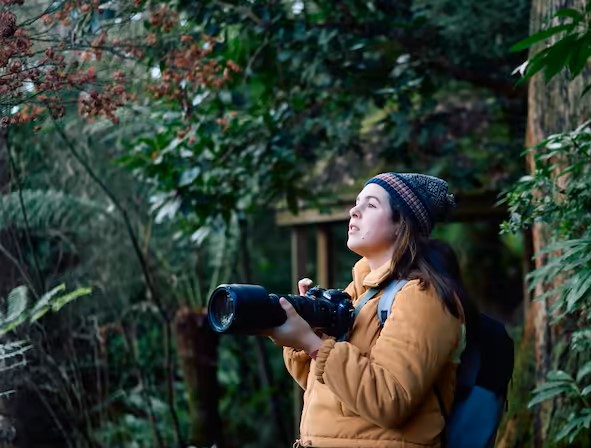
Dear conservationist, I no longer believe that “nature-based conservation” is a good thing.
Dear Conservationist,
Reading the title of this blog, you may be wondering what crazy drugs I’m on. For so much of my life, my identity and branding have centred around being a conservationist and caring for other conservationists. Even the fact that I addressed this letter to a conservationist demonstrates the fact that I assume that you, dear reader, identify as such too. So please let me explain why I no longer believe that nature conservation is a one-way ticket to protecting global biodiversity.
Over the past 5 years, I have been on a decolonising journey, reading many books by Indigenous authors, learning Indigenous bird names, and creating very sincere Acknowledgements of Country that include my deep gratitude to all of the hundreds of thousands of people who have looked after the land I am on before and alongside me. It baffles me when Australians use stock standard insincere Acknowledgements of Country when we are so privileged to live alongside the oldest living culture in the world.
Because my initial learning took a very localised focus, my self-imposed education centred mostly around Australian land management and connection to Country. Through reading and listening to Indigenous speakers and authors yarn, I have come to notice how many elements of conservationist behaviours feel alien if you compare them to Indigenous connections to Country. Why do we traipse around the continent with fancy technology looking for birds? Why do we do Indigenous “jobs” such as fishing and building shelters as a leisure activity? Why is Western society convinced that untouched Country is the best kind of Country? Bruce Pascoe’s words from his latest book Black Duck, stress that unmanaged Country is not healthy, and that truly abandoned wilderness is sick. This notion has stuck with me ever since.
Recently, I have been diversifying my education further afield, and have realised how problematic conservation is beyond the Australian context. Removing people from Country and creating private reserves is common in highly biodiverse areas across Africa, India and South America. Fortress conservation is the term given to the method of trying to protect land by kicking everyone off of it and building a fence around it. By protecting land, conservationists are creating sick Country and sick people. The land is no longer managed by the people who have lived alongside it for thousands of years and the people become displaced, no longer able to maintain their cultural connections to the land, diet, or medicine.
Reading Decolonise Conservation, Co-edited by Ashley Dawson, Fiore Longo and Survival International, I was struck by the engrained racism that still prevails throughout the conservation industry. People with white skin who kill animals are called hunters and people with darker skin who kill animals are shamed as poachers. Conservation in the global north is tied to leftist values such as “being green” and creating a better future, and in the global south, conservation is militarized, right-wing, and can result in murder, rape, displacement, and malnourishment. Global conservation organisations are quick to show you de-forested habitats and less quick to advertise abandoned villages.
To be honest, I was having an identity crisis before reading this book, but this is the book that really made me question if I wanted to be affiliated with conservation efforts at all, or the term conservationist for that matter. But as you can see, this blog is still called Conservationist Care and Lonely Conservationists still exists, and I will explain why.
In my book, How to Conserve Conservationists, and at the start of most of the talks I give, I share the story of why I left my career in ecology behind, so I apologise if you have heard this before. In 2016 I was completing my honours in a North Sumatran rainforest, living my childhood dreams. When I was a mere toddler, I asked my mum how I could save the orangutans from deforestation and inside the Leuser Ecosystem at 24 years of age, I had worked out the answer to that question. It was simple, if you provide opportunities for locals to earn a living wage by protecting and living amongst the forest, the forests will stay forests (apologies for the over-use of the word forest). If you displace people and require them to earn an income, the forests will turn to monoculture. I saw the transformation before my eyes. In just two years, I saw forests envelop buildings, forest education being taught in schools, and local women creating compostable seedling bags made from banana fibres.
Moreso than my observations, I felt myself existing as a reciprocal part of the forest ecosystem. My sweat combined with the humid air, my blood fed hungry leeches, and my hair added to birds nests as the trees snatched it from my head. It was a true ego death and at that time, I understood that I could never save the forest, because the forest was not a separate entity to be saved. We were one.
Since that time, I have been focused on community conservation, and Lonely Conservationists is a representation of my passion for this space. Since seeing how crucial community is to habitat preservation, I have transitioned from science to education, community engagement and empowerment. This year I transitioned further out of the conservation industry by getting a job in women-based leadership. I thought I’d be more self-conscious about not working directly in the conservation industry, but caring for communities, to me, feels like an integral part of the conservation puzzle and I feel more at home in this space than I ever did mapping orangutan nests in ArcGIS.
I tell this story once more because at the end of Decolonise Conservation, the book stresses that community conservation is the way forward to regaining healthy Country. Not all conservation efforts have blood on their hands, and integrating community health and well-being into land conservation is a constructive way forward. This is especially true if conservation efforts prioritise Indigenous peoples living on and managing their homelands. I have seen first-hand how we can reverse monoculture, logging, and dry soils with something as simple as providing a living wage to people who deeply understand their Country. This observation of successful community conservation was enough for me to leave my childhood dreams behind, knowing that my Western methods of conservation were not needed there.
Another reason that I am not ready to totally denounce conservation is that the other day I facilitated a session at a Private Landowners Forum. In the depths of my decolonisation journey, I felt a bit gross having committed to a private land event- but this particular event really surprised me. Throughout the entire day, Indigenous perspectives were given a stage, credibility, and importance. Not just in the Welcome to Country- First Nations voices and perspectives were integrated into every session. What was more surprising was that two separate men spoke about their struggles with mental health before I was even handed the microphone. Attending this event made me so proud of how the industry has transformed, at least here in Australia, and made me feel good about being an advocate for these particular conservationists and their efforts.
As with any form of education, my journey doesn’t end here, and as with every industry, there will always be layers of nuance and shades of grey. I may not believe in nature conservation in the same way I used to, but I still believe in the power of community and the need to care for one another. Nowadays in my work, I make sure to emphasise that to heal Country, we must too heal ourselves. As moving parts in many ecosystems, we must acknowledge that we are Country and Country is us- given this, we should not exclude ourselves from our protection and preservation efforts. That sounds a little bit like what I’ve been saying all along though doesn’t it.
To end with the very same final sentence of Decolonise Conservation: “People and nature are inseparable and protecting nature should be a part of the bigger issue: how we live and how we create a world in which a healthy life is possible for everyone.”
Take care of yourself and each other,
Jessie
In case you’re interested, here are some books by Indigenous authors that have been pivotal in my learning that I didn’t mention:
- Sand Talk- Tyson Yunkaporta
- Dark Emu- Bruce Pascoe
- Braiding Sweetgrass- Robin Wall Kimmerer
- Fire Country -Victor Steffensen
- Aboriginal Peoples and Birds in Australia -Philip A. Clarke
- The Yield- Tara June Winch
- Growing up Aboriginal in Australia- Anita Heiss
I have some more sitting on my dresser that I will be sure to add when I am finished too 🙂


One Comment
Aishwarya
Dear Jessie,
I cannot explain the emotions I went through while reading this piece. A year back, I too was oblivious to how people were being affect in conservation efforts. It was my firsthand experience of working with them during my internship that I realised it. Every time I had approached them, I felt guilty. I questioned myself (and still do)-isn’t it my privilege that’s allowing me to ask them what to do and what not do? Its high time that we decolonise our ways of thinking and approaching conservation.
Lots of love,
Aishwarya