Dear conservationist, don’t lose your passion because society tells you to.
Dear conservationist,
I apologise that it has been a while since I last wrote to you. Running workshops outside of my work hours and planning the recent LC connection day have absorbed much of my time, but I promise I was thinking of you often.
On April 19, I encouraged Lonely Conservationists to meet up locally, wherever they were in the world, to build connection, resilience and community. It was such a wonderful day, with meet-ups in Seattle, Bali, Brisbane and here in Melbourne.
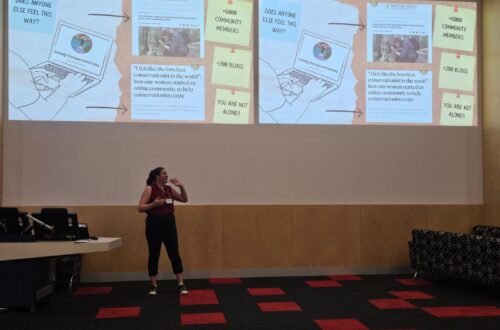
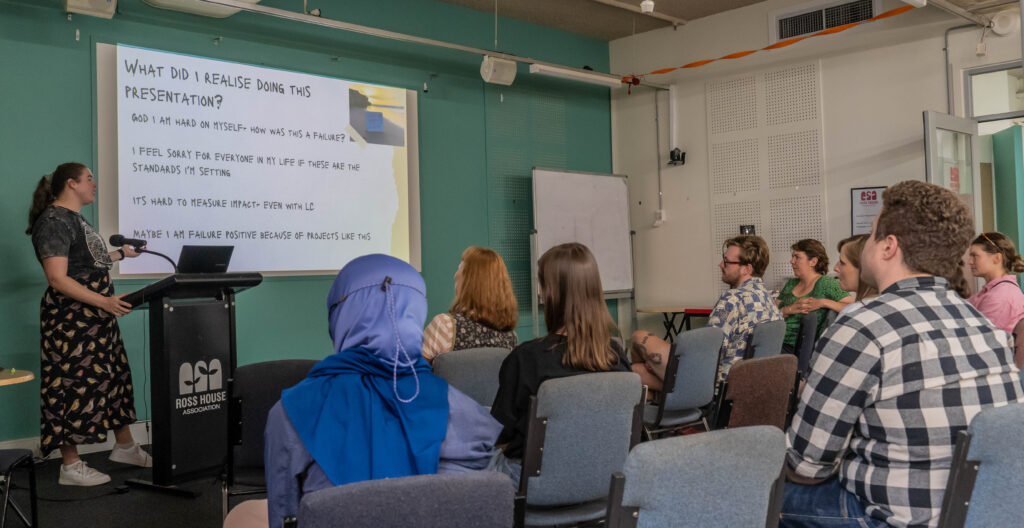
For the Melbourne event, I hosted an afternoon of presentations for individuals to talk about what they are most passionate about. Unfortunately, one of my speakers had to tend to a last-minute family emergency, so I took her place at the podium. Those in the room that day know that my presentation was half talk, half existential crisis, and I want to use this letter to dive into why this was the case, and the reflections I have gleaned since.
On discovering that I needed to cover a presentation on Thursday evening, on the Easter Friday public holiday, I sat at my desk to put one together. I thought about all that I am passionate about and landed on the topic of failures, why they are so important and why perfectionism is a scam. I started flicking through the Rolodex in my brain, picking out my most important failures and the lessons I had learnt from them, until I came across a project that I perceived to be the biggest failure of all. Suddenly, my talk had shifted to focusing on this project in isolation, my biggest conservation failure and why I owe my life to it.
There is not much left of this particular project. There are only crumbs of it left on the internet, it is not featured at all on my resume, and many parts of it had been wiped from my memory completely. As I went back through old files, it was like solving a mystery, piece of evidence after piece of evidence surfacing, leading me to question why I thought this project was a failure at all. The revelations became such that my final presentation title was “What I learnt about myself whilst preparing this presentation.” I am still pondering some of these learnings today.
So this is it, the story of what I have until now considered to be my biggest conservation failure.
***
In 2014, I was working as an assistant research officer on a little island north of Madagascar’s mainland called Nosy Be. On this island, I spent 6 months researching reptiles, birds, insects, amphibians, but most importantly, my study species of choice, Black Lemurs. My favourite lemur was affectionately named “Nose Man” due to his facial defect, and he lived in my favourite field site, site 10. Now, you see, over the 6 months that I lived on this island, site 10 almost halved in size due to local deforestation. Flying in and out of Madagascar, you can tell that deforestation is a widespread issue as the landscape looks brown and desolate from above. In travelling across the mainland after my 6-month stint on Nosy Be, I realised that the only protected forest was preserved because local guides were earning an income by leading tours for travellers who were interested in seeing Madagascar’s unique flora and fauna.
Opposite Nosy Be was Nosy Komba, a tourist island, where I found my comparative research site for my study. I was looking to see if tourism had an impact on Black Lemur behaviour, and if so, what was it? I quickly observed that the tourist lemurs of Komba were overweight from the sugar-rich bananas that tourists were feeding them multiple times a day. With a high sugar diet and no need to forage, this population of lemurs was the only population of the two to show aggression. To add to their charm, this population sported bald spots as a result of their tousling.
On return home to Australia, I was up in the middle of the night, unable to sleep because I was racking my brain as to how I could continue my work from Madagascar, plagued by images of receding forests and obese lemurs. Remembering how the only patches of forest were saved by the local tourist economy, but how impacted the lemurs were by the same income source, I wondered if tourists could play a part in safeguarding habitat and wildlife populations by making ethical and strategic decisions whilst on holiday. It was then, in the depths of the night, from my bed, that Heroic Tourism was born.
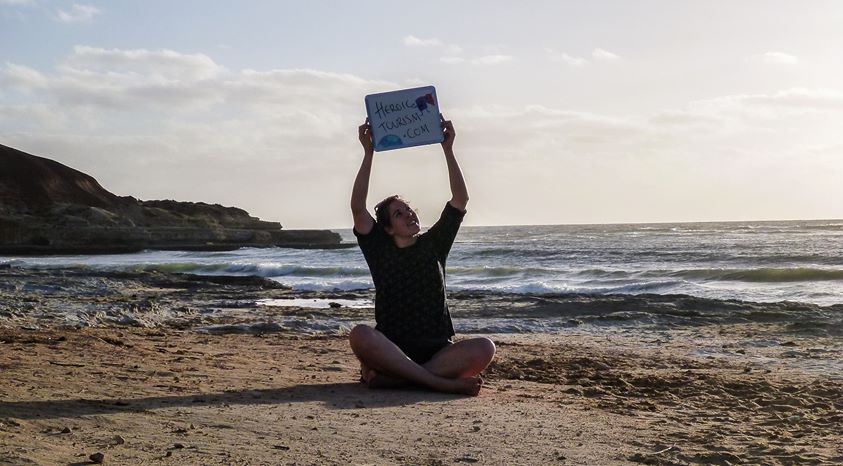
Heroic Tourism was an educational campaign aiming to inspire travellers to “Be a Hero” by making decisions on their travels that would positively contribute to saving at-risk wildlife and habitats. Now, this is very colonial wordage, but nonetheless, messaging that felt appropriate to me 11 years ago (we live, we decolonise, we learn.) I asked my friend very nicely to make me a logo, which evolved through many increasingly modernised iterations. My dad helped me to make a website that I eventually replaced with one I created on my own, and a Facebook and Instagram page eventually followed in tow.
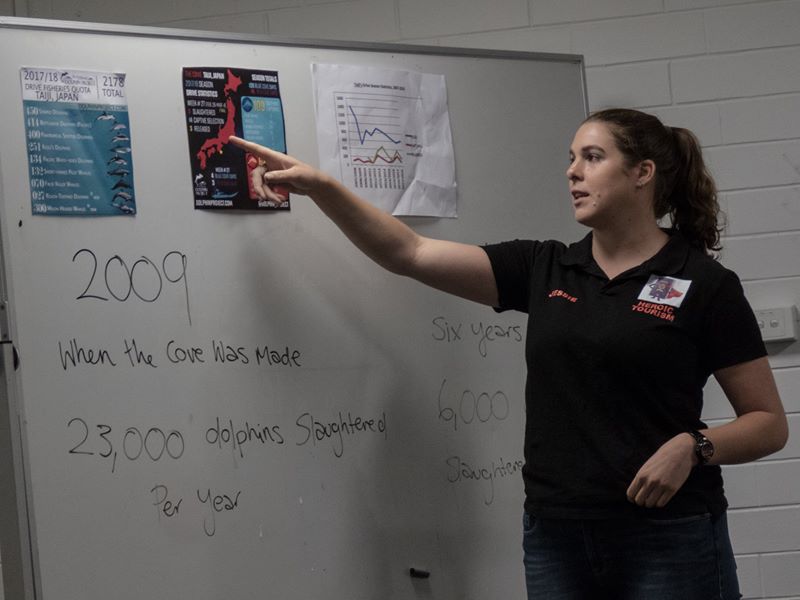
With a passion for change fuelling me, I didn’t stop at online education. In the first two years of Heroic Tourism, I hosted two documentary screenings, The Cove and Tyke the Elephant Outlaw, where I imparted knowledge about the plight of captive dolphins and elephants and proposed ethical alternatives to sea parks and elephant rides. After The Cove screening, I hosted a trip on an ethical dolphin viewing boat that my mum researched for her university studies when I was a kid. I knew that seeing is believing, and I hoped that I could influence local travellers to make a change with a combination of education and experience.
Looking back on these events, I saw snippets of feedback that I collected and posted to the Facebook page about how most attendees thought that all captive-animal tourism ventures had humane treatment of animals, and were surprised to learn differently. All I remember from those events is how fewer than 10 people showed up to each event, not that I caused a shift in mindset for each of those individuals.
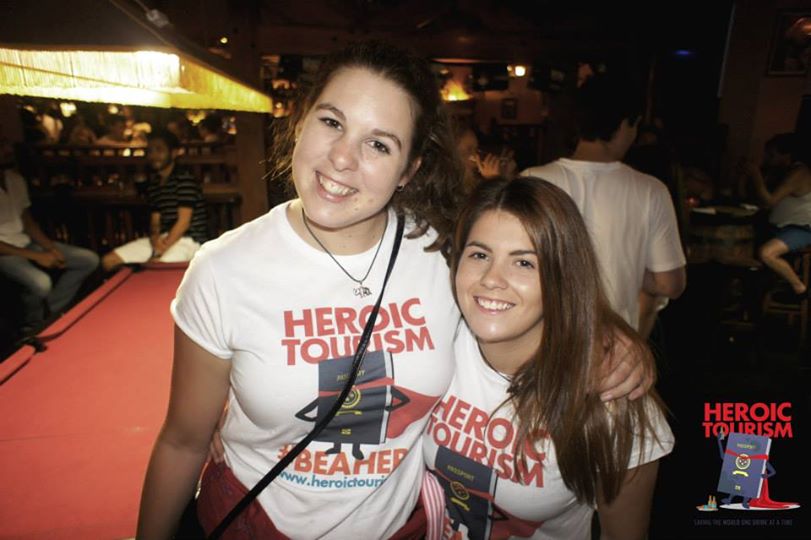
Educating a handful of people wasn’t enough for me, I needed to do more. I hosted a pub crawl to engage my friends and their friends in my plight, and Adelaide city brimmed with Heroic Tourism logos on white pub crawl t-shirts. With each curious pub-goer who asked what the cause was, each of the crawlers became advocates in sharing my message. A friend brought my now-husband, Todd, along, and our first ever message exchange was him asking me if he could purchase a shirt. Not only did this pub crawl help to spread the word, but it also formed the origin story of my most treasured relationship.
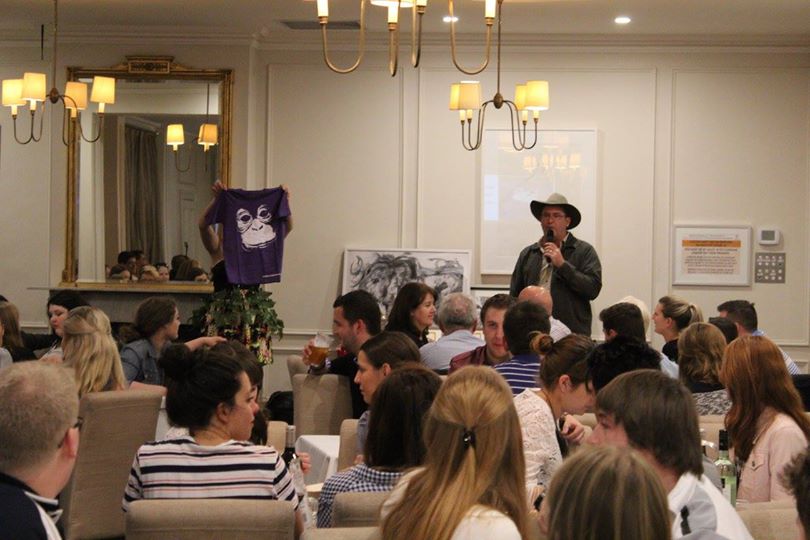
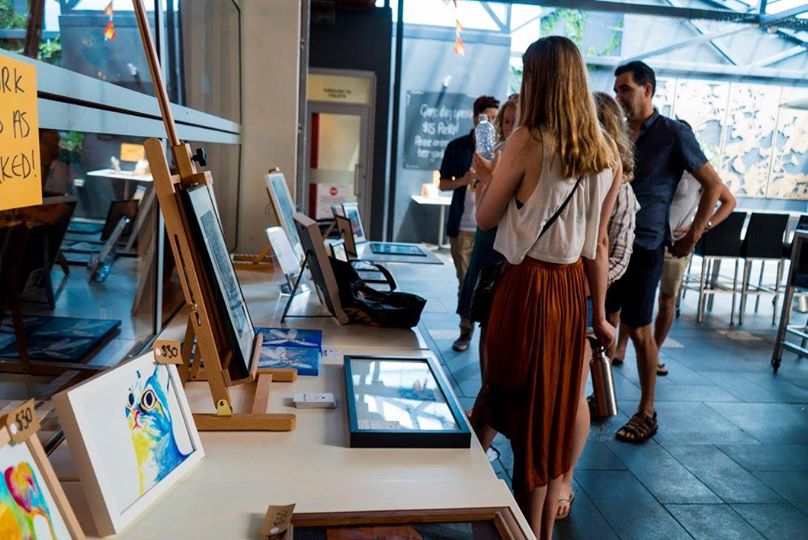
The education was progressing, but I knew there was more I could do, so I hosted two fundraising events to raise money for conservation organisations that were helping to protect wildlife and precious ecosystems. These events were a success, and through a wildlife-themed quiz night and art auction, I was able to raise over a thousand dollars each for two organisations focusing on protecting populations of elephants in Sri Lanka and orangutans in North Sumatra.
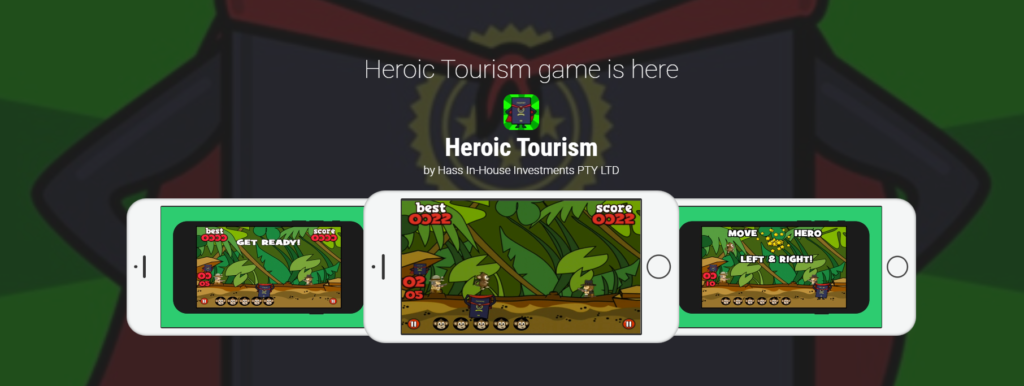
Looking back through old files, I found a screenshot of a flash game that my dad’s friend made for me. In the Heroic Tourism game, you move the passport left and right to save monkeys from shooting poachers. I also found photos of pledge bracelets that I created to be a gentle reminder of travellers’ commitment to protect forests and oceans in their travels. These were inspired by the beaded bracelets I collected from national parks across South Africa and were repurposed from second-hand jewellery. I was trying to engage people in my cause in as many different engaging ways as possible.
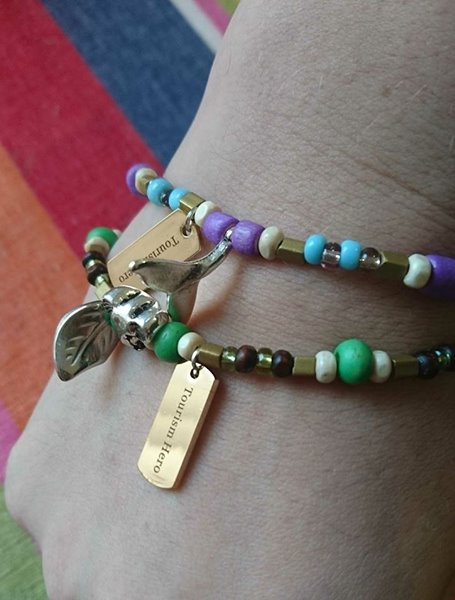
On Saturday morning, the morning of the LC event, I was talking to Todd about these revelations and how I was bewildered that I had forgotten much of this former passion of mine. After digging around on saved versions of the internet from 2018, he reminded me of a radio interview I did about Heroic Tourism, and an education program that I developed for the Adelaide Zoo’s Youth at the Zoo program.
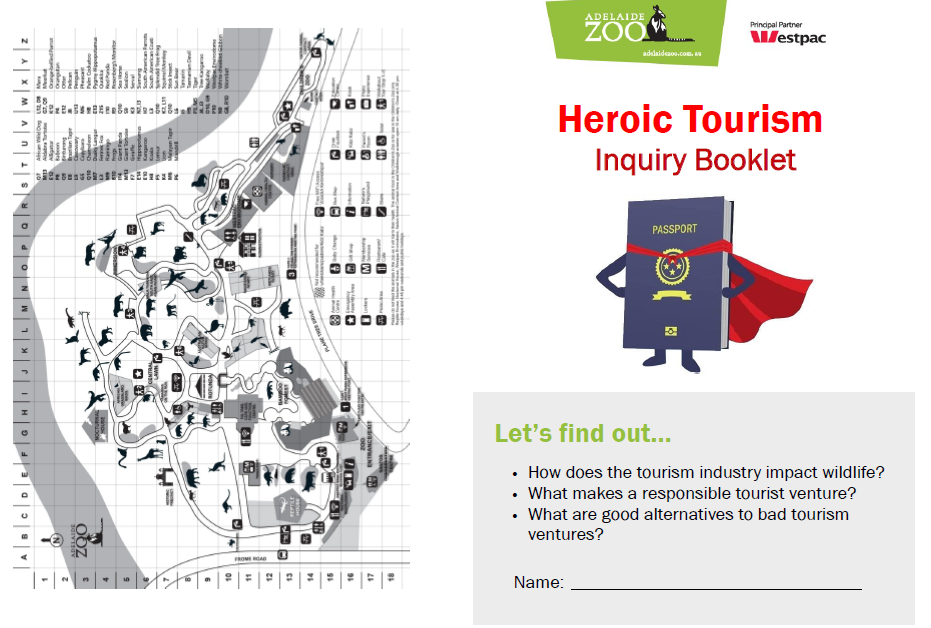
On reflection, I believe that the zoo program might be the cause of my selective amnesia. I distinctly remember being so excited that I was asked to make an education program, and proud that my ideas were considered important and worthy by an institution as influential as a zoo. A few days later, a friend congratulated me on my new job. “What new job?” I asked him. On realising he meant the zoo gig, I explained that it was a one-time contracted education program, to which he said: “Oh….why did you even post about it then?”
No matter what I did, events, games, raising money, education, partnerships, social media- society would not value my efforts unless I had a paid job. In 2018, I moved to Melbourne for Todd’s work and with that, I decided to focus all my efforts on getting a paid job and finally becoming a respected conservationist. Lonely Conservationist began in January 2019, so you know the rest from there. Heroic Tourism was wiped from the internet, my resume and my mind, forever imprinted in my brain as my biggest failure. I’m just a person, how did I think I could solve problems as vast as deforestation or the mistreatment of animals?
Some people thought Heroic Tourism was hard to say, others didn’t connect with the plights of animals and habitats in the ways I did, and others didn’t value any effort unless it was contributing to a formal professional career. Instead of remembering the efforts I went to create change, the people I educated and the money I raised for conservation, I remembered the people who were dismissive of my ideas and actions.
This, dear conservationist, is why I am so passionate about looking after you. The majority of activism and environmental work is unfunded, and everyone doing unfunded work is so important, and their work is so essential to the movement. If everyone gave up their volunteer pursuits, campaigns and passion projects in pursuit of a job, only a slim fraction of the meaningful work that needs to happen would ever get done.
In the end, Heroic Tourism did change many people’s approaches to planning their holidays, with many of my friends sharing stories about how they educated their Contiki groups about why they shouldn’t ride elephants. Not only that, but it also set me up with all the skills I needed to create and run Lonely Conservationists. Website building, social media, event planning, and many of my other skills that I attest to Lonely Conservationists, had actually come from its predecessor Heroic Tourism.
So I am proud to tell my story now, to have shared it on Saturday and to be sharing it with you now. I want this story to be a reminder of how hard we our on ourselves in the relentless pursuit of change. People have tried to tell me this my whole life, but seeing it now, it’s too visceral not to believe. I am disturbed by how much of this project was blocked out of my mind and how I ever considered it to be a failure at all.
So to those who need to hear it, your volunteer efforts, your passion project, your studies, your hobbies, and your rest, whatever you do that connects you to conservation and our natural world – it matters. As Gandhi says, “Whatever you do in life will be insignificant but it is very important that you do it.”
So with this in mind, I’d like to take a moment to say that I’m proud of you for your efforts, in case nobody else has. In case all you hear are the nay-sayers, all you see are the people who need educating, and all you feel is that you could be doing more, I am proud of you. Not everyone has the empathy you have for our natural world, and not everyone is working to make positive change for it either. Meaningful protests, activism campaigns, or change-making initiatives rarely have corporations funding or backing them up. You don’t need an entity to support you to have a worthy cause, you don’t need a paid job, and you don’t need the validation of others for your work to have meaning. It’s meaningful because it has purpose, not because it feeds into capitalism or the Western ideals of success.
If I saw any of you go to the efforts I went through, only to erase them from history, I would be distraught. For this reason, I now endeavour to take pride in my smallest efforts and encourage you to do the same. Like a drop in the ocean, we often have no idea who, or how far our ripples reach. Just because we can’t see our ripples, doesn’t mean they don’t matter.
So here’s to our future, the changes we influence, and its resounding visibility. No more selective amnesia around perceived failures that should make us proud.
Always your cheerleader,
Jessie


You May Also Like
Dear conservationist, you don’t need to be angry to care.
5 ways I care for myself as a conservationist