
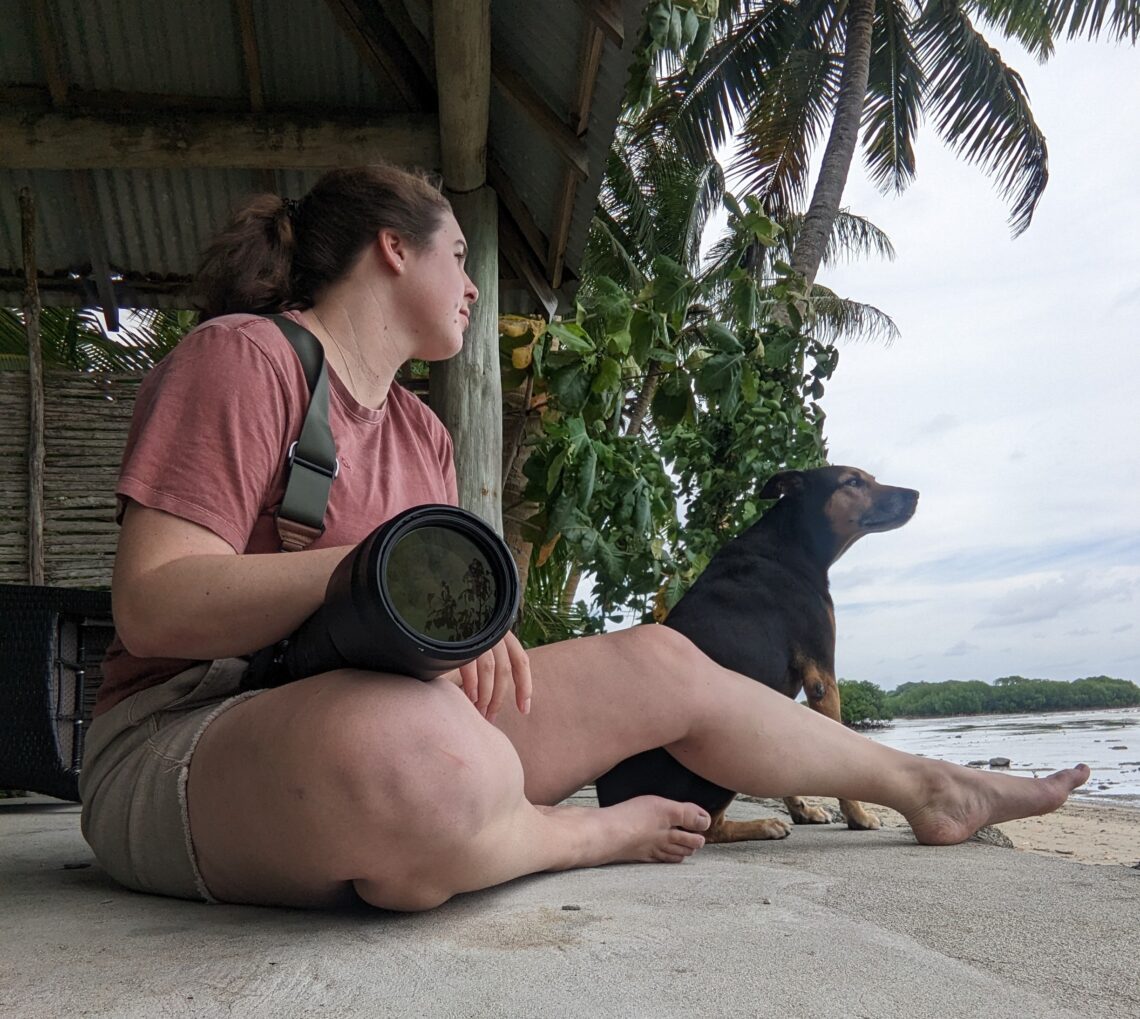
Dear conservationist, It is important to remember that Mother Nature loves you back.
Dear conservationist,
Many of us are inundated with waves of grief for the state of our planet. Sometimes that grief manifests into hopelessness and sometimes into apathy. Regardless, people on the front line of ecological conservation are one of the most impacted communities when it comes to eco-anxiety, grief and despair. But you, my wonderful human, wouldn’t feel such sadness if you didn’t love our beautiful earth so deeply.
For a while now, I thought I could never overcome such a profound state of grieving, but recently I have come to shift my feelings about our magnificent Earth for the better. In the book Big Magic by Elizabeth Gilbert, she tells the story of an environmental lecturer who asks her students to raise their hands if they love Mother Nature. As you’d expect, all of the hands in the class pointed towards the ceiling. She then asks the students if they think Mother Nature loves them back, and all the hands stay down. Elizabeth moves on to discuss Western culture and our general perception of, us as humans, existing as separate entities from nature rather than as a part of Earth’s diversity and systems. This in turn puts the onus on us as a separate entity, tasked with taking care of nature without being a part of Earth’s reciprocal cycles. Of course, many cultures around the world see the reciprocity and harmony in working with nature as a part of the Earth ourselves, Indigenous Australians are a great example of this.
I think back to my work in North Sumatra where I experienced a form of ego death. I was living, sleeping and working in the forest, day in and day out. My hair was being caught on trees and being used in birds’ nests. My blood was fuel for hungry leech bellies and my prolific sweat was intermingled with the humid air around me. I have never felt more a part of the environment than I felt at this time. The reciprocity made working there easier because I was giving to the forest ecosystem, but I was also taking. Taking shade from the trees that were shielding me from the midday sun, taking water from the creeks to drink and bathe in, and taking ferns from the ground to eat and nourish my body. It is when you are detached from the reciprocity, that the cycles of nature become skewed and the sadness starts to seep in.
It is not surprising that in the height of my grief, I have taken myself back outside to resume my presence in nature’s ecosystems in pursuit of allowing Mother Earth a chance to love me back. I am once again thankful for the cooling shade and breeze, the songs of the birds, and the bright flowers that decorate the vegetation. When I lie suspended in water molecules spanning the majority of Earth’s surface, I allow nature to embrace and envelop every part of my body, feeling immersed in something bigger than myself.
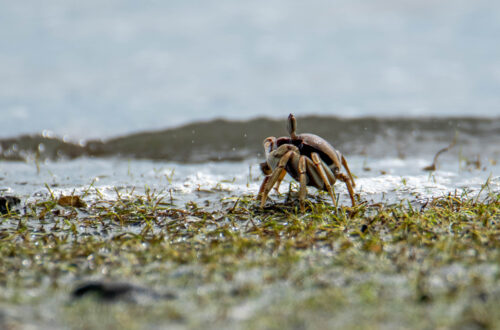
I have recently become very emotional about crabs, and attest their presence to helping to heal myself from any remaining grief I have been experiencing. Sitting in place on a shoreline or mudflat, I don’t have to move a muscle to notice the incredible abundance and diversity of crabs (and fake crabs, see the Ologies podcasts) and their behaviours. Every new environment I go to, whether on crystal clear coastlines, mangrove-laden mudflats, or rugged hilly terrain, I am graced with new, breathtaking crustaceans. In a conservation industry that is always so focused on what is lacking, I am finding crabs to be my source of abundance, diversity, wonder, and hope. Each new species of crab has become a new gift from Mother Nature and a new way to share her love with me.
You don’t need to be in a forest or a crab-laden mud flat to feel the reciprocal love of nature. You can feel it by going to wherever you feel most connected to your local environment. You can even sit on the balcony of your city highrise apartment and wonder at the pigeons and how they moved from caves to rooftops. You can marvel at the moon and how it pulls its strings to control the tides. You can notice the spiders and thank them for their job in ridding your house of flies and mosquitoes. You can turn on the tap and feel gratitude to nature for providing you with clean, fresh drinking water. Experiencing heartfelt wonder, admiration, and gratitude for the ways that nature loves me back has been imperative in healing my ecogrief and I hope it can help to heal yours too.
So next time you are overwhelmed with sadness about the desolate landscapes that used to be forests, the bleached corals that used to match the vibrancy of its surrounding fish, and the cookie-cutter buildings that are soon to be developed on precious wetlands, try to focus on what remains in abundance. Despite the damaged reefs I have seen, I have still seen an abundance of fish of a variety of shapes and colours persist and sparkle in the ocean. Amongst the sprawling cities of Australia, a variety of birds such as the White Ibis, Galah and Australian Magpie still prosper, despite the reduction of their native habitat. Also in this world, there are ant colonies that span over multiple continents- and that blows my mind- as well as Mountain Ash trees. They have positively minuscule seeds, yet continue to grow into the second-tallest flowering tree in the world- the world is full of miracles such as this.
Maybe the reason that humans as a species are so prolific, is because Mother Nature, in all her evolutionary ways, has been so kind to us. We have prospered because the environmental conditions have favoured us for so long. It is tragic that many of us have entered into abusive, one-sided relationships with her, but it doesn’t mean that we all have to. We often revel in Indigenous cultures for their notions of “take care of the Earth, and it will take care of you in return” but we don’t internalise the sentiment enough. Maybe we think that it’s too late, that we haven’t taken care of the Earth so how could she possibly look after us in return? For a moment, humour me in stripping yourself from the collective and internalise the notion that you, my dear conservationist, do spend a lot of time, effort, and energy looking after our natural world, so you may allow yourself to be loved in reciprocity. It’s okay- Mother Earth is ready to care for you in ways you’d never even think of caring for yourself.
In all crabbiness- the good kind,
Jessie


2 Comments
Pingback:
Pingback: