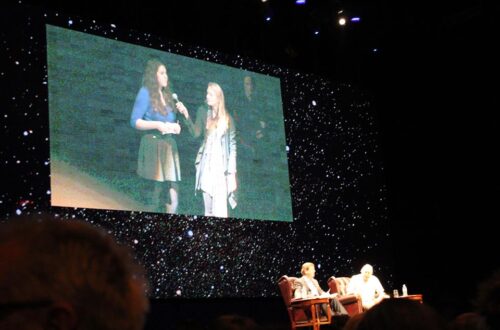
Dear Earth Carer, if you are a missunderstood generalist- you are not alone.
Dear Earth Carer,
The other day I went to grab a small notebook that I remember keeping with my passport. I had no memory of ever writing in it, and I thought I could use it for a new project. I opened the notebook to make sure it was blank, but instead of vacantly lined pages, I found pages of scrawls with the following headings: what I am good at, what brings me joy, what I can uniquely offer, and what I am scared of. Reading my notes took me back to 2024, as I sat on the musty bottom bunk of a Fijian hostel after Zooming with someone I had met on LinkedIn, who I hoped could help me get my life back on track.
As I read through the notes, that sad, lost soul who was so uncertain of her future is still, in the core of her being, deeply relatable to the person I am now. We are both good at building community and centring decisions around our values; we both find immense joy in Indian food, the beach, and a good book; and we can both uniquely offer a deep passion for caring for Earth Carers. What stood out as the main difference between the Jessie frozen in time in that notebook and the Jessie I am now is what I had listed under my fears. At that time in my life, one of my greatest fears was never finding the box that fits me.
In my life, I have always been subject to being “too” something. No university wanted to take me on for a PhD because I was too hard for the social scientists and too soft for the ecologists. I was too intersectional in my interests, wanting to conceive and implement localised, sustainable solutions, all the while tackling holistic industry issues that impact the people working within it. Not only that, I wanted to make sure the whole community could get on board, considering age, capability, cultural considerations, and the impact of sex and gender. To me, it has always been obvious to think in ecosystems, as everything is interconnected and rarely fully operational and understood in isolation. Unfortunately, the society I occupy isn’t built for ecosystem thinking, interconnectedness, or slow, intentional relationship building. I have held many boxes in my hands during my career, and none were big enough for me or my ideas to fit in.
The box that said scientist didn’t fit the educator and communicator parts of me, and the box that said communicator didn’t fit the problem-solving parts. The project manager box didn’t fit the community leadership parts of me, and the community engagement box didn’t fit the special interest parts. Along my career journey, I have had to construct boxes for myself to fit these extra limbs of mine, getting an official organisation-issued box to fit some parts of me, and cobbling together my own boxes out of resources I had lying around to fit the other parts that were being left behind.
Throughout my life, I have often found myself questioning if I was the right shape at all. If I keep not fitting into all these standard-issue boxes, maybe there is something wrong with me. A great leader once said to me that if I don’t agree with the way that society is, then why do I keep trying to mould myself into its shapes? Even if I eventually do contort myself into one of society’s boxes, it won’t feel comfortable or right. I wondered if I would ever find a box for me to fit in that does feel spacious and comforting. The longing for a space for all of me to fit in has been the throughline of my career journey, churning through boxes like Cinderella trying on all of those ill-fitting shoes.
But you may have noticed that I started this letter to you with the realisation that I no longer relate to this yearning or fear. This is where I can come to you with some great news. You see, Dear Earth Carer, a few weeks ago, I returned from yet another stint away, but this time I returned to a beautiful gift. This gift was a shape made for me by three amazing people. On reflection, it wouldn’t make sense that one person could make a shape that fits me and the sum of all of my parts; it seems obvious now that my shape would need to be collectively collaborated on and born out of sharing and caring. I don’t know what exactly my shape is. Maybe it’s a rhombus, or a trapezoid. Maybe it’s a dodecahedron- I am not quite sure. All I know is that I am now in a beautiful position where I report to three different people and can spend time working on three separate projects across three separate interest areas. In any given week, I can be found leading community events, giving presentations, writing project plans, collecting data, collaborating with and supporting others, and communicating projects. I am able to work on topics that relate to my education, interests I have picked up later in life, and apply the skills that I have honed through the years of running Lonely Conservationists. No longer do I need to create extra opportunities for myself to flex my broad range of skills and interests; now I can do them all in one place- in my very beautiful shape.
I am so comfortable in my new shape that I want to coin the term career euphoria. Suddenly, my time outside of work is free for me to be a better partner, loving friend, and enjoyer of hobbies. No longer do I feel like all of my energy needs to be spent searching far and wide, yearning for a box in which to fit. My time with this precious shape may not last long, but for now that doesn’t matter. This shape feels so special, and so magical that I want to enjoy every second I can spend in it. This letter to you is also a love letter to this time of my life, for which I have endless gratitude.
Alongside my newfound contentedness, the feeling of my new shape highlights to me a stark lack of traditional options for those fellow generalists out there. Sure, there are varied portfolios amongst traditional positions; however, even in my most diverse portfolios, they haven’t been this satisfyingly varied. They haven’t broken siloes and spanned teams, leadership, and ways of working. There are, of course, other options, such as working multiple positions or taking on multiple side hustles; however, with each new addition to a career, comes new administrative burdens and less available free time for important frivolity. A diversity in jobs on a resume also brings with it questions and concerns from new employers about a perceived lack of capacity to pick a lane and stick it out. The stigma attached to non-linear pathways can be felt in social settings, interview rooms, and networking conversations. “What do you do?” becomes a confusing question. What do I do as a job, or what do I do in life that exercises my broad range of skills and interests? Those are two very different answers.
There are stark benefits to interdisciplinary work that are not being realised for organisations when siloing their generalists. To employ a generalist who is working on multiple projects across an organisation means that they are seeing the whole ecosystem and they know how all of the components interact and work together. They know information that the birds know, so they can assist the frogs with this same knowledge that they wouldn’t otherwise be privy to. They can identify opportunities in the grass that may be suitable for the browsers who have been focusing on the shrubs. They already know the dragonflies from their work on wetland habitats, so they can easily reach out again when needing to understand insect flight paths. In clearer terms, the unsiloed nature of generalists means that they have a brain full of knowledge, a network full of contacts, and a menu of skills to choose from. Sure, they may not be detailed, precise, or prone to perfectionism, but that isn’t their niche. They are the magpies that can thrive in a suburban park or a sclerophyll forest, and this flexibility works for them and the ecosystems they inhabit.
In previous job searches, I have found that the positions calling on people to do everything are often lower paying and garner less respect. The assumption is that the people who take these “everything jobs” are not particularly trained or specialised in any one field, so they can help with a range of tasks that nobody else in their dedicated position wants to do. This, my dear Earth Carer, is not a tactical use or adequate appreciation of a generalist- and most likely this trend is rooted in misogyny, though this is just my hypothesis, and I am happy to be challenged on it. My supporting evidence is that housewives, mothers, and other caring roles traditionally assigned to women often carry with them the expectation of a well-executed variety of skills and knowledge in exchange for minimal appreciation in return. For example, being competent at sewing, cooking, cleaning, hosting social events, and raising children, amongst many other tasks, is often taken for granted in these roles. As another example, think of Brenda, our fictional but trusty admin assistant. Poor Brenda is paid peanuts by her organisation but is constantly told by her male boss that the whole organisation would fall apart without her. Finally, Brenda gets a promotion; however, she is now required to specialise in managing the company’s finances, and suddenly she feels bored and unfulfilled as she is not utilising her full set of skills. She does it anyway, though, because she is grateful for the recognition and pay rise, and even better, she can finally afford a nice holiday for her and her family. Often the generalist’s plight is to embrace a generalist landscape in a low-paying role, or sacrifice this variety for a higher wage.
My dear Earth Carer, will you indulge me in imagining a world in which generalist job listings factored in the level of skill required to excel in a range of unrelated tasks, communicate effectively with multiple parties, and manage the complex organisational requirements that arise with nurturing a diverse portfolio. Now imagine that these same listings reflected these factors within the salary offered, including opportunities for promotion in other generalist positions. Now, you might be thinking- aren’t you just describing a coordinator or manager? I am sorry to tell you that I am not. I am talking about generalist jobs that are rooted amongst the hubbub of on-ground project planning, delivery, communication, and evaluation. Being amongst the bones of it all, but say, for three different animals’ bones instead of just one. These jobs may be near-impossible to imagine, because until now I didn’t think that they existed, and to be honest with you, I still don’t believe that they exist in a permanent, dedicated role.
Now I have found my shape; I feel like it may be a key of sorts that has unlocked a new need for care within the environmental sector. In a diverse industry that seeks to protect and conserve ecosystems and other complex cycles of interaction and relation, we need to be creating and fostering job positions that echo this holistic interconnectedness. Moreover, I would argue that we need to invest in interdisciplinary conferences and events and begin to unsilo all of the specialisations, so that the amazing specialists out there can talk to each other. I will never forget a conference that I spoke at that had three keynotes, one on community, one on culture, and one on biology. All together, they set the scene for the conversations to follow and brought with them a diversity of delegates from all disciplines that could speak to the range of knowledge and perspectives needed to protect and preserve our precious ecosystems. It is true when they say sharing is caring, and as a generalist, it turns out that multiple teams within an organisation sharing me is the most cared for that I have felt in my entire career. For others, I imagine that being able to speak to or represent their culture, landscape biology, and community holistically within industry events is, too, deeply nourishing. Forcing people into lanes and boxes is, in contrast, not a very caring thing to do. Grab your shape at the door! Everyone deserves to fit in here.
Knowing that my shape is not permanent, I am starting to reflect on what can be possible for generalists like myself and consider how we can create spaces where we can thrive. How can ecosystem thinking lend itself to an ecosystem career landscape, an interconnected system in which both specialists and generalists can thrive? In the meantime, I am going to cherish every second of this time inside my new shape, and relish the gratitude that comes with knowing that I do belong somewhere, and that there are places in this world in which I fit.
If you are a generalist like me, just know that there are shapes out there that fit you too. They just require a little bit of collaboration, connection, and concoction- more of a witch’s brew than a box. Maybe my shape is a cauldron, and I am but an amalgamation. Who’s to know?
With care,
Jessie

You May Also Like
Dear conservationist, does your conservation career feel too reactive? Let’s change that.
Dear Earth Carer, you don’t have to bend to a world prone to breaking you.